

The Inner Clarity Field
“Inner Clarity is not about perfection of sight but purity of seeing”
“The gift of Inner Clarity is simple, profound: the ability to know what is, and from there, to move with clean intention.”
Introduction to The Inner Clarity Field
At the heart of Inner Clarity lies stillness — not the forced quiet of suppression, but the natural calm that emerges when we no longer chase every thought or react to every ripple of emotion. Imagine a lake on a windless morning: its surface unbroken, its depths clear. In this stillness, the world above is reflected without distortion, and what lies beneath can be seen in its true form.
Most of us live in constant motion — mind racing, emotions surging, distractions pulling us in every direction. In this turbulence, clarity cannot thrive. What we perceive becomes clouded by agitation, urgency, and noise. But when we learn to pause, to breathe, and to rest in the space beneath the surface, the noise begins to soften. Slowly, the sediment of confusion sinks, and the waters of the inner world clear.
Cultivating calm presence does not mean escaping life, nor does it mean eliminating thought or emotion. Rather, it is about creating an inner environment where clarity can arise naturally. Just as the lake does not need to force its waters to settle, we do not need to force the mind into clarity; we simply allow stillness to do its work.
This still lake within is always available. It is not a place of withdrawal, but of strength. In calm presence, decisions become less reactive, relationships become less entangled in projection, and life takes on a deeper sense of grounded flow. Clarity is no longer a rare visitor but a steady companion.
The invitation of this aspect is simple yet profound: to stop chasing clarity as something to be attained and instead to cultivate the conditions in which it naturally arises. Stillness is not the absence of life — it is the space in which life becomes clear.
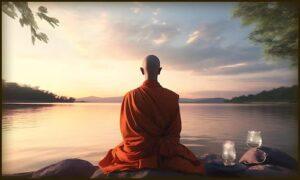
1 - The Still Lake Within: Cultivating Calm Presence
Clarity cannot be forced. The more we chase it, the further it slips away. True clarity begins not with grasping for answers, but with quieting the noise that clouds perception. Just as a lake becomes still when the winds calm, your inner world becomes clear when thoughts and emotions are given the space to settle. This is the first step in cultivating the Inner Clarity Field: learning to rest in stillness, so that what is true can naturally rise to the surface.
Quieting the Noise — allowing thoughts and emotions to settle
Noise is not just the sound of the outer world — it is also the chatter within. The endless stream of thoughts, judgments, worries, and self-commentary creates an inner storm that makes clarity difficult to find. Eastern culture calls it, Monkey Mind. Endless chatter. When emotions are stirred, they often rise like waves, crashing against one another, amplifying confusion. Many try to control or suppress this noise, believing silence will come through force. But true clarity does not arise from pushing thoughts away; it comes from allowing them to settle in their own time. Like watching a train passing by quickly. Rather than trying to focus on each carriage racing past, simply allow them to blur into … a train going past.
Think of the sediment in a jar of water. If shaken, the water turns cloudy and murky. Yet if the jar is placed down and left untouched, the particles drift to the bottom on their own, leaving the water clear. The same is true of the mind. By creating moments of pause, by ceasing to stir the waters through constant reaction, we allow thoughts and emotions to settle naturally. Stillness is not created by eliminating noise but by no longer feeding it.
This practice requires patience and trust. At first, when you stop to rest in quiet, you may notice the noise even more acutely. The thoughts may race, the emotions may swell. But just as the sediment needs time to sink, your inner world requires space to find balance. Over time, with repeated practice, you discover that the noise has less power to define you. You remain the lake, even when ripples pass across its surface.
Quieting the noise is not an escape from thought or emotion. Rather, it is a shift in relationship with them. Instead of identifying with every passing story, you begin to watch them as movements within you, temporary and transient. This awareness brings distance, and with distance comes peace. You no longer need to fix every thought or follow every feeling; you learn instead to allow.
When the noise settles, clarity emerges — not as a forced conclusion, but as a natural presence. Choices feel lighter, your sense of direction clearer, and your inner voice easier to hear. What once seemed overwhelming becomes manageable because it is no longer wrapped in agitation. In this space, you reclaim the ability to respond with wisdom rather than react from confusion. You begin to Choose what thoughts to follow as you become more aware of how each line of thought creates different frequencies inside the mind and body. Discerning which are growth full and which are time consumers, slowly taking up valuable space in your day.
Reflective Questions – Quieting the Noise
What does “noise” look like for me — is it mental chatter, emotional turbulence, or external distractions?
When I sit in stillness, do I notice resistance, restlessness, or an urge to “fix” the noise?
How might I create space in my daily routine for thoughts and emotions to settle naturally, without force?
Can I recall a time when clarity arose on its own, without me needing to chase or control it?
What practices (breath, silence, nature, journaling) help me quiet the noise and return to calm presence?
The Power of Pause — How Stillness Reveals What Words Cannot
In a world driven by speed, productivity, and noise, the pause is often overlooked or dismissed as unimportant. Yet the pause holds a power deeper than constant action ever could. When you stop — even for a breath, even for a moment — you create a space where truth can reveal itself. Stillness is not an absence of life but a presence so full it cannot be measured in movement or words.
Pausing interrupts the automatic patterns that carry us along unconsciously. It is in these pauses that awareness expands. A heated argument cooled by silence, a rash decision avoided by hesitation, an anxious thought dissolved in a breath — these are examples of how pausing can transform not only outcomes but also the energy from which choices arise. Stillness clears the ground for wisdom.
Stillness also reveals what language cannot hold. Words are tools, often necessary, but they are limited by definition and shaped by perspective. The pause takes you beyond words, into direct experience. In silence, the subtle becomes visible: the shift of energy in a room, the quiet strength of your own breath, the intuitive knowing that does not require explanation. The power of pause is that it opens a door to truth that cannot be argued or debated, only felt.
This practice does not demand great stretches of time. A pause can be a single breath taken consciously before you speak, or a moment of stillness before you step into a new room. When honored consistently, even the smallest pauses add up, creating a rhythm of clarity within the flow of life. Over time, stillness ceases to be something you “take” and instead becomes the ground you naturally stand upon.
In the pause, you return to yourself. You step outside of the whirlwind of external demands and internal chatter, and you remember that you are not the storm — you are the awareness that watches it. This recognition, simple yet profound, is the essence of inner clarity: the ability to remain rooted in truth while the world continues to move around you.
Reflective Questions – The Power of Pause
1. When was the last time I allowed myself to pause before reacting, and what did it change?
2. Do I equate stillness with laziness, or can I begin to see it as a source of strength?
3. What truths or feelings emerge for me in silence that words cannot fully capture?
4. How might I weave small pauses into my daily rhythm — before speaking, deciding, or acting?
5. In what situations do I most resist pausing, and why?
Closing Reminder
The pause is not a withdrawal from life, but a return to it. In stillness, the noise settles, and the next step becomes visible without effort. When you choose to pause, you are not wasting time — you are reclaiming your clarity, your presence, and your freedom to act with intention.