

3 - Authoring Your Story
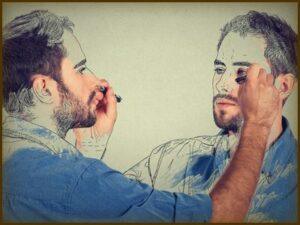
Authoring your story means taking back the pen of your life. Every day, words are written onto your pages — by family, culture, media, employers, even strangers. If you are not conscious, you may find that entire chapters of your life are not truly your own. To author yourself is to pause, to question, and to choose with awareness. It is the practice of deciding which voices belong in your book and which do not, of shaping your story with intention rather than drifting on the tide of others fears and expectations.
Taking Responsibility for Your Narrative Instead of Allowing Others to Write It
From the moment you become aware inside the womb, the voices of others begin shaping your inner landscape. Parents set expectations, teachers assign labels, peers offer judgments, and society at large tells you who you “should” be. At first, these influences may feel harmless, but over time they accumulate into scripts that you begin to live out unconsciously. If you find yourself fearful of failure, desperate for approval, or endlessly comparing yourself to others, chances are you are living a story written by someone else’s hand.
Taking responsibility for your own narrative begins with awareness. When a thought arises — “I’m not good enough,” or “People like me never succeed” — ask yourself: Whose voice is this really? Often, you’ll find it isn’t yours at all. It may be an echo of a parent’s criticism, a teacher’s doubt, or a cultural message absorbed over years. Recognizing this truth is the first step in breaking free.
But awareness alone is not enough. Responsibility means actively choosing whether those voices have a place in your life going forward. Just because someone offers their opinion, their fear, or their expectation does not mean you need to accept it. To author your story, you must discern which voices are guidance and which are chains, and then consciously decide what belongs in your narrative.
This is not about rejecting all outside input. Others will always have perspectives, and some may be valuable. The difference lies in who holds the final authority. Responsibility is realizing that no matter what others write in the margins, you choose what appears in the main text. (And in fact that applies to legal documents also) That choice is power — the power to direct your life according to truth, not fear.
Ultimately, reclaiming your narrative is an act of freedom. The moment you stop outsourcing your story, you begin to live more authentically. You no longer dance to the tune of other people’s scripts but move to the rhythm of your own soul. This shift transforms life from reaction to creation, from victim-hood to internal energetic sovereignty.
Reflective Questions – Taking Responsibility for Your Narrative
Whose “hand” is most often shaping my story right now — mine, or someone else’s?
When I hear criticism or outside opinions, do I automatically accept them, or do I pause to question their truth?
What stories from fear based media, government, family, or society have I unconsciously allowed into my life?
How can I better discern between my authentic truth and someone else’s narrative?
What would change in my daily life if I reclaimed authoring of my story, decision by decision?
Making Decisions with Awareness and Intentionality
Every decision you make, no matter how small, shapes the story of your life. Yet most choices are made in haste, out of habit, or under the influence of others. You say yes when you mean no, you follow routines that no longer serve you, and you chase goals that were never truly yours. Without awareness, your story begins to write itself — not through conscious creation, but through default patterns and external pressure.
Intentional decision-making interrupts this cycle. It asks you to slow down, to pause before acting, and to consider whether your choice reflects your deepest truth. This is not always easy. There will be moments when fear urges you to conform, when convenience tempts you to ignore your values, and when outside voices drown out your own. But it is precisely in those moments that your intent matters most.
Living intentionally does not mean controlling every detail. Instead, it means aligning your actions with your highest values. For example, if you value peace, you may choose not to engage in unnecessary conflict. If you value creativity, you may prioritize time for art even when others dismiss it as unimportant. Each decision, when made consciously, willingly and deliberately, becomes an act of authoring the self— a sentence in the story you are writing with your life.
Over time, this practice builds strength. Each intentional choice reinforces your inner resolve and diminishes the pull of outside control. You begin to notice how different life feels when you live by design rather than by default. Even challenges lose their power to derail you, because you meet them with clarity and alignment rather than confusion and reaction.
Ultimately, intentionality is the art of living awake. It transforms everyday choices into sacred acts of authoring self. You stop drifting on the currents of fear, habit, or expectation, and instead steer your own course. With each conscious choice, you write a story that reflects who you truly are — not who the world tells you to be.
Reflective Questions – Making Decisions with Awareness
Which of my current beliefs or habits feels heavy, as though they were given to me rather than chosen by me?
What activities or choices make me feel the most authentic and alive?
How do I react when I go against family, cultural, or societal expectations—do I feel guilt, fear, or relief?
What traditions or values do I want to keep because they resonate with me, not because they were imposed?
If I stripped away everything imposed on me, what would remain as truly mine?
Closing Reminder
You are the only one who can truly write your story. Others may add their opinions, attempt to influence your direction, or even try to dictate the script, but the final word always belongs to you. Authoring yourself does not mean controlling everything — it means living awake, choosing consciously, and taking responsibility for what you create. Each moment is a blank page. The question is: will you let someone else fill it, or will you write it yourself?