


2 - Energy Awareness
Energy Awareness is the practice of noticing where your life force flows, how it is influenced, and where it is drained. Every thought you think, every emotion you feel, every story you give attention to is a form of energy exchange. Too often, we move through life unaware that our focus has been hijacked by fear, distraction, or external narratives. By becoming conscious of these subtle movements of energy, you begin to reclaim your power. Awareness is the first step toward sovereignty — for only when you can see where your energy is going, can you choose where to direct it.
Observing how your thoughts, emotions, and attention are influenced by external forces.
Energy awareness begins with recognizing that, your thoughts, emotions, and attention are not random. They are constantly being influenced by forces outside of you—whether it be media, conversations, environments, or even the collective mood of society. Every soundbite, headline, or interaction has the potential to pull your energy in a certain direction. The first step in energy awareness is learning to notice when this happens!
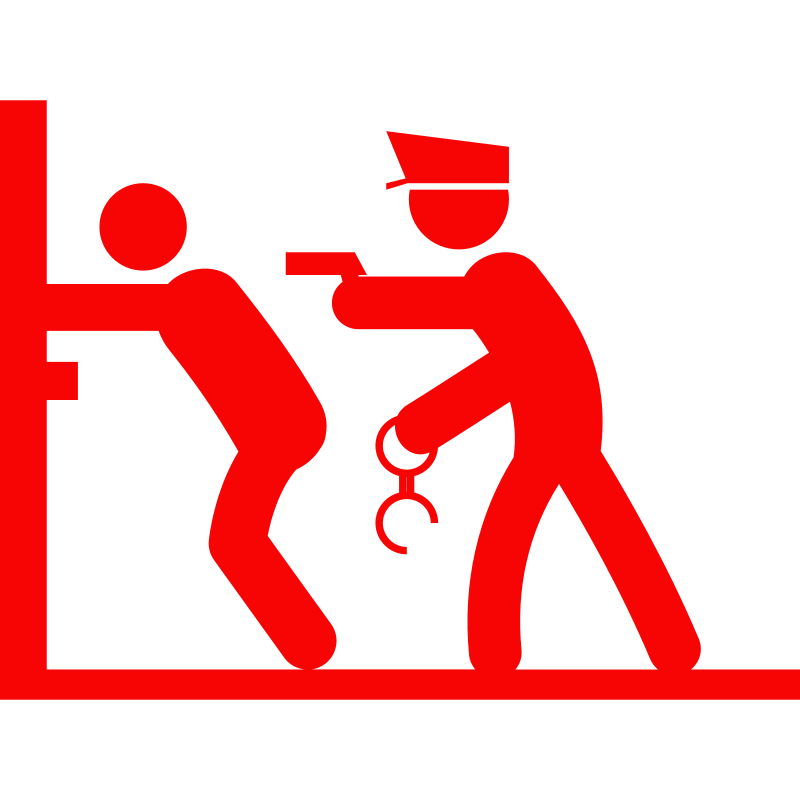
For example, you may wake up feeling peaceful, only to hear the morning news declare a crisis. Suddenly, your calmness is gone, replaced with worry or fear. What changed? Not your circumstances, but your attention and energy were redirected by an external force. The same can happen when a colleague makes a comment, a family member expresses anger, or you scroll through social media. It may be that a police officer is trying to pull you over, or an assumed authority such as a council telling you you need to pay more. These inputs hook your energy, shape your emotional state, and often determine how you act.
Becoming aware of this dynamic allows you to reclaim choice. Instead of reacting automatically, you can pause and ask: “Is this how I truly feel, is it how I want to feel, or am I taking on someone else’s energy?” This awareness interrupts the cycle of unconscious reaction. With practice, you start to see the difference between what belongs to you and what has been impressed upon you.
Energy awareness also means becoming conscious of where your attention flows throughout the day. Attention is like currency—the more you invest in fear, drama, or negativity, the more those experiences grow in your life. Often the conditioning gets us to then go out and share the fear. Conversely, when you direct attention toward peace, creativity, gratitude, or meaningful action, those energies expand. Awareness of where you place your focus is one of the most powerful tools for shaping your inner state and your outer reality.
Cultivating this awareness requires gentle observation, not judgment. Instead of scolding yourself for being “influenced,” recognize it as an opportunity to learn. Pat yourself on the back. Each time you notice your energy being redirected by an external force, you strengthen your capacity to choose differently. Over time, you become less reactive and more responsive, centered in your own energy regardless of what is happening around you. Regardless of any assumed authority wanting or trying to get you to do something you disagree with.
Ultimately, energy awareness is about inner energetic sovereignty. It is about becoming the master of your own inner landscape, instead of a puppet pulled by the strings of external narratives. By observing and redirecting your thoughts, emotions, and attention, you reclaim authority over your own life force—and this is a vital step in authoring your story and living freely.
Understanding the Self
Understanding the self is the foundational step on this path. But we must learn and innerstand both aspects. The system, conditioned self – re-active child and the re-sponsive adult self conditioned through choice, not coercion. Most of us move through life without ever stopping to consider who we truly are, beyond the labels, roles, and expectations imposed by society, family, and culture. We identify ourselves by our jobs, our possessions, our relationships, or our achievements. Yet, underneath all of this, there is a deeper essence—an internal presence that observes, feels, and creates. The journey begins by noticing the difference between the identity we’ve been taught to accept and the self that exists naturally, beyond conditioning.
To truly understand the self, it’s important to pause and reflect on your daily thoughts, reactions, and choices. Ask yourself: “Am I living this moment from who I am, or from what I have been told to be?” Many of us are unaware that a significant portion of our lives is directed by subconscious conditioning. Childhood experiences, societal rules, media narratives, fear based narrative and cultural norms subtly shape our decisions. Observing these influences without judgment allows you to distinguish between authentic self-expression and externally imposed behaviors. Looking at emotional hooks like fear, hate, anger and blame are just a few.
Understanding the self also involves recognizing the roles you play and the masks you wear. In different contexts—family, work, friendship—you present variations of yourself. A different mask for whoever is standing in front of you. This is not inherently wrong; these roles can be useful and necessary. The key is to discern when these roles serve you and when they confine you. Did You choose to or did it happen without you realizing ? The real self is the observer behind these roles, the conscious awareness that can choose which mask to wear or when to remove them entirely.
A profound aspect of understanding the self is accepting your inherent perceived imperfections and contradictions. You are not required to be perfect, nor is there a single “ideal” version of yourself. Growth comes from acknowledging the entirety of your experience, embracing both strengths and weaknesses, light and shadow. By accepting yourself fully, you stop resisting aspects of your being and start to operate from a place of truth rather than fear or judgment. This well heard and well held belief that none of us are perfect is a destructive one. We use it as an excuse often to validate our perceived failures. It is time to rewire the brain to think differently. You are always perfect, for the very moment you are in. Time to let go all excuses. In the settlor position and of course the adult, you take full accountability. Yet having a belief that every moment you experience is indeed perfect will change your life.
Finally, understanding the self is not a destination but a continuous journey. Each day presents opportunities to observe, reflect, and align more closely with your inner essence. The practice of mindfulness, journaling, or quiet contemplation supports this process. As you deepen your understanding, you’ll find a sense of stability and clarity that becomes the foundation for all other teachings, including how to offer your energy consciously.
Reflective Questions –Understanding the Self
Which aspects of my identity come from my own choices, and which come from societal, family, or cultural expectations?
How do I feel when I remove the roles or labels I usually wear—am I comfortable with the “true” self underneath?
What thoughts, beliefs, or habits do I hold that might be shaped more by conditioning, than my own authentic insight?
When I observe myself in daily life, where do I notice tension between who I am and who I think I should be, or indeed could be?
What small step can I take today to act more from my true self rather than from an external expectation?
Author your story and live freely.
Learning to Reclaim and Consciously Direct Your Energy
Once you recognize how external forces influence your energy, the next step is to reclaim it. Most people give away their energy unconsciously—through worry, arguments, overthinking, or constant attention to distractions. Reclaiming energy is the practice of gathering these scattered fragments and bringing them back into your awareness, where they belong. It is like calling your spirit home after being dispersed in a thousand directions.
The act of reclaiming begins with noticing. Each time you catch yourself lost in another person’s drama, an anxious “what if,” or an emotional spiral triggered by the news, pause. Take a breath. In that moment, silently affirm: “I call my energy back to me.” This simple intention is powerful. With practice, you will actually feel your energy returning, as if you are becoming fuller, more present, and more alive in your own body.
Once reclaimed, energy needs to be directed with purpose. Energy is creative—it grows whatever it touches. If you continually pour it into fear or resentment, you will strengthen those experiences in your life. But when you consciously direct it toward peace, healing, creativity, or freedom, you nourish those states. This is where true authorship begins: realizing that your attention and energy are the ink with which you write your story.
Conscious direction of energy is not about suppressing emotions or pretending everything is perfect. It is about choosing how you respond. For example, you may feel anger when faced with injustice. Instead of letting that anger consume you, you can channel it into purposeful action, creative expression, or inner strength. In this way, even challenging emotions become fuel for growth rather than drains on your spirit.
Practical methods for directing energy include meditation, journaling, creative projects, time in nature, and meaningful service. These practices anchor your energy in places that expand you, rather than diminish you. Over time, directing energy becomes second nature. You no longer scatter it in reaction to every external trigger but hold it steady, guiding it where you choose.
Reclaiming and consciously directing your energy is an act of self-mastery. It transforms you from being a passenger on life’s ride into being the driver. This is not about controlling the world around you, but about mastering the world within you. When your energy is your own, and you choose where it flows, you step into the power of creating your life deliberately—authoring your story and living freely.
Reflective Questions – Reclaiming and Directing Energy
Where in my daily life do I most often lose or scatter my energy?
How can I practice calling my energy back when I notice it drifting away?
What qualities, experiences, or states of being do I want to consciously grow with my energy?
Which practices help me anchor my attention in a calm, empowered way?
What difference do I notice in myself when I direct energy consciously instead of unconsciously?
Closing Reminder
Your energy is your most valuable resource. Where you place it shapes your reality and creates the quality of your life. Every moment is a choice: to give your energy away unconsciously, or to direct it with clarity and intention. Remember — awareness itself is power. By simply noticing, you begin to reclaim. By choosing, you begin to create. Guard your energy, guide it wisely, and let it serve the life you are authoring.